24-hour posture management
A joined-up approach across the child’s day and night.



Specialist clinical service
Family-centred assessment for children and young people whose posture, seating and equipment needs affect comfort, development, care and participation across daily life.
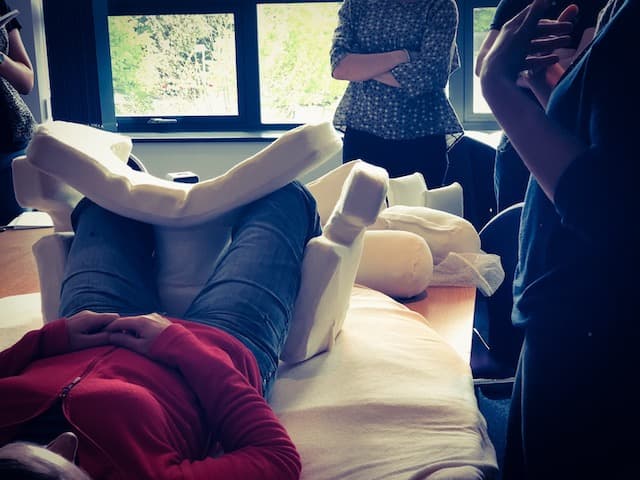
Children and young people use posture and equipment support across home, education, travel, play, rest and personal care. A family-centred assessment considers these different settings alongside the child’s comfort, abilities, communication, preferences and opportunities to participate.
The service is intended for children with complex or changing physical needs where specialist clinical reasoning about posture, wheelchair seating, lying, standing or associated equipment would support the wider plan of care.

Parents, carers and the child or young person hold essential knowledge about what works, what is difficult and what matters to them. Assessment begins by understanding their priorities and the practical realities of routines, space, transport, school and care.
Communication is adapted to the individual. Consent, assent, privacy, sensory needs, fatigue and tolerance are considered throughout, with assessment paced in a way that is respectful and clinically useful.
The clinician may review development and clinical history, posture and body shape, movement, muscle tone, comfort, skin and pressure risk information, sleep, transfers, personal care, mobility and existing equipment. Growth and the likely lifespan of equipment are considered without trying to predict every future change.

Paediatric support is often multidisciplinary. With appropriate agreement, we can liaise with NHS and independent therapists, wheelchair services, education staff, case managers, carers, commissioners and equipment suppliers. Our role is to contribute specialist posture, seating and equipment expertise while respecting the responsibilities of the child’s existing clinical team.
Where equipment trials are needed, shared goals and clear feedback help compare options meaningfully. Recommendations should be clinically justified, practical for those using them and understood by the people who will support the child day to day.
Regular review may be important during periods of growth, transition between services or education settings, changes in health or function, and after new equipment is introduced. The timing and scope of review are individual rather than automatic.
This page describes a specialist assessment service. It does not provide individual medical or therapy advice and should not replace guidance from the child’s treating clinicians or urgent healthcare services.
Related support
Enquire
Tell us about the person’s circumstances and the support being considered. Our team can help clarify an appropriate next step.